Pages

Tampilkan postingan dengan label Gadgets. Tampilkan semua postingan

Jumat, 01 April 2011

Apple's global marketing VP to depart


Allison Johnson
Allison Johnson, Apple's vice president of worldwide marketing communications, is said to be leaving her post at the company to co-found a new marketing firm.
All Things Digital reports that Johnson, who came to Apple from Hewlett-Packard back in 2005, is still in the process of negotiating her exit.
Johnson's new gig is said to be co-founding a new marketing firm with former Facebook PR executive Brandee Barker.
This would mark Johnson's second departure from Apple, where she had worked previously. During the 1990s, Johnson held the position of director of media relations both at IBM then later Netscape Communications.
Prior to joining Apple for the second time, Johnson had spent six years at HP as the senior vice president of marketing, where she was said to be one of then-CEO Carly Fiorina's closest advisers.
News of Johnson's reported departure comes just a day after Microsoft Senior Vice President Mich Mathews announced her plans to leave the company later this year.

Selasa, 22 Maret 2011

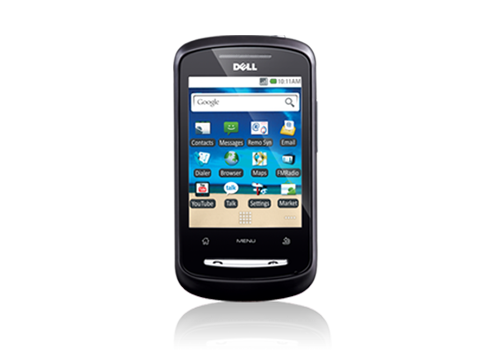
Dell XCD28


Create a new world every day


Visit Dell mobile reseller near you
New horizons. Colourful adventures. Exhilarating moments.
Inspiration sees no end in the world you create with the Dell™ XCD28. Bring your imagination to life with the smart 3G experience, Wi-Fi™, GPS and a host of exciting applications.
  • Android™ 2.1 OS
  • 3G HSDPA speeds upto 7.2 Mbps plus EDGE, GSM support
  • Wi-Fi b/g connectivity plus Bluetooth® 2.1 EDR plus AGPS plus FM
  • TFT LCD full touch up to 262K colours
  • 3.2 MP camera with 5x zoom
  • GPS will never leave you stranded. You can find the nearest city or simply find your way home with Google Maps
  • Storage — 200MB internal user memory plus support for external SD card up to 8GB
  • Access to Corporate Exchange Emails
  • Document Reader (Word, PDF, Excel, Powerpoint)
  • Includes 2GB Micro SD card
 
Dell XCD28

Minggu, 20 Maret 2011

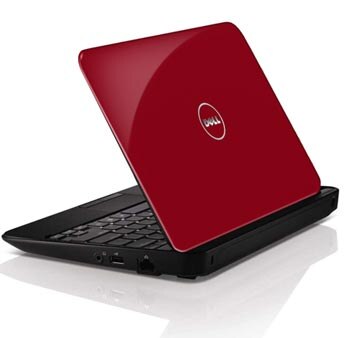
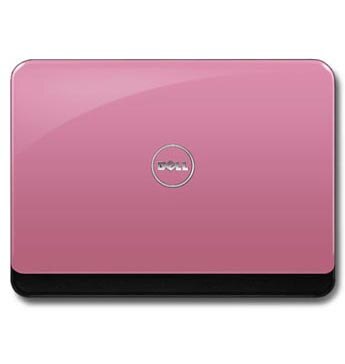
Inspiron Mini 10 Netbook

The new designed InspironTM Mini 10 is a lightweight mobile netbook that goes anywhere with you, so it’s always easy to check your e-mail or connect to the Internet. It’s everything you need to stay in touch and entertained on the road.
  • Get more done with up to 7 hours, 18 minutes of battery life
  • Go anywhere effortlessly with a compact under 1.33kg design
  • Store your movies, music and photos with the standard 250GB HDD
  • Be productive with an easy-to-use 92% full size keyboard
Dell Inspiron Mini 10 Netbook Computer - Lightweight and Compact

Lightweight and Compact

The Inspiron Mini 10 goes anywhere you go — and with ease. With a slim profile for computing in compact spaces and a starting at weight of less than 1.33kg, you’ll want to bring the ultra-portable Inspiron Mini® 10 with you everywhere you go.
Inspiron mini 1018 Laptop/Notebook

Uncompromising

The Inspiron Mini 10 is an affordable and lightweight netbook that doesn’t sacrifice any of the features you desire. In addition to long battery life, Genuine Windows® 7 and powerful Intel® processing, the new Inspiron Mini 10 boasts new options such as Wireless-N, DDR3 memory, a generous 250GB3 hard drive.
Dell Inspiron Mini 10 Netbook Computer - Entertainment on the Go

Entertainment on the Go

The Inspiron Mini 10 lets you watch movies, listen to music, edit videos and upload to the web to share your life with family and friends from almost anywhere.

Powerful performer
With long-lasting battery life (up to 7 hours, 18 minutes), you’ll be able to do more of what you want and stay connected longer.

Beautiful view
The Inspiron Mini 10 boasts a seamless 25.7cm (10.1 inch)  WLED display featuring a 16:9 aspect ratio that brings all your entertainment to life in stunning bright colors.
Dell Inspiron Mini 10 Netbook Computer - Maximum Connectivity

Maximum Connectivity

The Inspiron Mini 10 is built for today and tomorrow. Stay connected wherever you go with the new internal 802.11n WiFi connection, as well as Bluetooth® 3.0. Its lightweight design, including built-in webcam and microphone, will let you travel light while keeping up with your video chat, instant messenger and e-mail so you never lose touch with family and friends.
Dell Inspiron Mini 10 Netbook Computer - Smart Design

Smart Design

The Inspiron Mini 10 is the perfect travel companion that brings you sophisticated elegance in addition to processing power.

Keyboard
The Inspiron Mini 10 features a keyboard 92% the size of a traditional laptop keyboard. And a touchpad design with discrete buttons means you don’t have to sacrifice comfort or productivity.

Hard drive
Store all your photos, music and videos and easily access them anytime you want with the standard 250GB hard drive.

Style
Premium design features sleek styling with soft curves, rounded edges and high-gloss black finish.
Inspiron mini 1018 Laptop/Notebook

Fun Features

Take advantage of all the fun the Inspiron Mini 10 has to offer.

  • Support today’s bandwidth-hungry applications with Wireless-N, which lets you browse the Internet faster than Wireless-G, the networking standard most laptops are still using.
  • Get the most out of your Inspiron Mini 10 with up to 7 hours, 18 minutes of battery life.
  • Hold on to more of your content with the 250GB hard drive.

Kamis, 17 Maret 2011

Dell Venue Pro


Smart. Any Way You Slide It

Introducing the definitive Windows® Phone 7 experience with a 10.4cm (4.1") sliding touch display and full QWERTY keyboard. Features include:

  • The stunning WVGA AMOLED capacitive, multi-touch display allows for easier navigation.
  • With Office Mobile built in you can operate on the go as seamlessly as you would at the office.
  • Take your gaming experience on the road with the phone that lets you play games on Xbox LIVE.
Dell Mobile Venue Pro

Ready for work and play

You want a smartphone that allows you to stay connected1, be productive and keep in touch with colleagues, friends and family? Venue Pro is a do everything smartphone that helps you be more efficient in how you stay connected and entertained. Seamlessly toggle between your work and life apps. From your favorite games to keeping up on Facebook® , Twitter™ , Gmail and YouTube™ , Venue Pro keeps what’s most important to you at your fingertips.
Dell Mobile Venue Pro

For your viewing pleasure

See the world and your life like never before with the stunning 10.4cm (4.1") WVGA AMOLED capacitive, multi-touch display. The large screen allows for easy navigation and viewing of your email, calendar and web. Your photos, videos and movies have never looked better in the palm of your hand. No more squinting or panning - see the full width of the web page in one glance. And the high-quality scratch-resistant Corning Gorilla® Glass means your view can stay crystal clear.
Dell Mobile Venue Pro

Your life at a glance with Windows Phone 7

Imagine being able to see everything you care about in a single glance without ever breaking stride — an email from a friend or co-worker, appointment reminders, the score in the game or just the weather and time. Customize the Live Tiles on your start screen so what’s most important to you is always front and center and easily recognized with a momentary look. Microsoft® Office Mobile built in lets you operate on the go as seamlessly as you would in the office.
Dell Mobile Venue Pro

Elegant beauty

While the Venue Pro, with its elliptical, slender form fits comfortably in your pocket, it’s probably the last place it will ever be. Sure, its large 10.4cm (4.1") display, that lets you see everything most important to you at a single glance, will make it hard to put down. But you’ll also love how it feels in your hand. And just a simple slide reveals the full portrait QWERTY keyboard, providing a superb viewing and messaging experience.

Sabtu, 12 Maret 2011

Killer Apps

The only reason that HP (or Samsung, Motorola, Nokia/Microsoft, and the others) has a chance in this market is that those incompatible mobile OSes nevertheless all run the two greatest killer apps of them all, aka web browsers and GPS navigation. Most of the other apps (mail, social networks, etc.) that users need are web or cloud-based and can be accessed via the browser if an alternative is not provided. In this sense, there is only one OS and it is the one supported by HTML and other established web formats. Apple may be at a slight disadvantage because it does not support Adobe's Flash standard.

What those companies may need to do is identify a handful of the top killer apps in the existing market and spend the right amount of money to make sure that those apps migrate to their own platforms. Providing powerful tools that can facilitate app migration should probably be at the top of their to-do list. After that, the market will become very much like the car industry, a matter of status, gadgetry, trend and fashion. Eventually, there will only be one basic OS, preferably a user-customizable OS

HP's Risky Triple Play


Yesterday, HP announced its first three products using WebOS, the operating system for mobile devices that was its main prize for acquiring Palm in July of last year. HP is already known for printers, PCs, and laptops, but the new products—a tablet, an updated smart phone, and a new super-small smart phone—highlighted a new strategy for the company.

The Touchpad tablet, Pre 3 smart phone, and Veer mini smart phone, show WebOS in three different sizes. By announcing them together, HP hopes to emphasize both the flexibility of the operating system and how well WebOS can work for a user who owns multiple devices running it. It also hopes to spur developers to create apps for the platform. However, this may still not be enough to capture a market that's dominated by other big companies such as Apple and Google.

Palm's WebOS operating system was the ailing company's last-ditch effort to reclaim the market it once dominated with its popular PDA. The WebOS operating system uses Web technologies familiar to developers, such as HTML and JavaScript, instead of Objective C, the specialized language used to program apps for Apple's iPhone. The Palm Pre, which was the first device to feature the operating system, was praised for its design when released in June 2009, but it was a flop in the market, leading to HP's acquisition of Palm.

The acquisition of Palm, and the launch of these three devices, is an important move for HP, the world's largest personal-computer maker. The market is shifting away from desktop and laptop computers toward increasingly powerful smart phones and tablet computers. But the strategy HP has chosen is risky. It aims to innovate its way to a successful position in this emerging market, which is dominated by Apple with the iPhone and iPad, and by other hardware companies that use Google's free Android OS.

Now HP hopes to use WebOS to give it a leg up in the current war for mobile-device users. The Touchpad is a tablet designed to compete with Apple's iPad and its imitators. The Pre 3 is an updated entry into the smart-phone market. And the Veer is something of a novelty: a smart phone about the size of a credit card, although considerably thicker.

"For the first time, WebOS is on a device [the Touchpad] that lets its intuitive nature shine through," said Jon Rubinstein, a senior vice president and general manager at HP. Rubinstein is a former Apple executive who served as executive chairman of the board at Palm.

Augmented Reality Goggles


I held a black-and-white square of cardboard in my hand and watched as a dragon the size of a puppy appeared on top of it and roared at me. I watched a tiny Earth orbit around a real soda can, saw virtual balls fall through a digital gap in a table, and viewed a life-sized virtual human sitting in an empty chair.

What made these impressive special effects possible was a pair of augmented reality (AR) glasses—specifically, the Wrap 920AR glasses from Vuzix. Whereas virtual reality shows you only a digital landscape, augmented reality (AR) mixes virtual information, like text or images, into your view of the real world in real-time.

In the last few years, AR has started appearing on smart phones. In that context, software superimposes information on top of your view of the world as seen through the device's screen. But AR eyewear, which provides a more immersive experience, has been confined to academic research and niche applications like medical and military training. That's been largely because older AR hardware has been so bulky and has cost tens of thousands of dollars.

The Wrap 920AR from Vuzix, based in Rochester, New York, costs $1,995—about half the price of other AR goggles with similar image resolution. The company hopes that the glasses will appeal to gamers, animators, architects, and software developers, and it has developed software for building AR environments, which is included with the glasses.

Wearing the 920AR means looking at the world through a pair of LCD video displays. The 920AR is heavier than a regular pair of glasses but far lighter than other head-mounted virtual-reality displays I've tried. The displays are connected to two video cameras that sit outside of the glasses in front of the eyes. The screens show each eye a slightly different view of the world, mimicking natural human vision, which allows for depth perception. Accelerometers, gyro sensors, and magnetometers track the direction in which the wearer is looking. The glasses also come with ports that let users plug it into an iPhone for portable power and controls, such as loading a particular AR object or environment.

The Vuzix software can recognize and track visual markers (like the black-and-white piece of cardboard I held), or lock onto a certain object or color (like the soda can). Tracking works well as long as the pattern or object being tracked are visible to the cameras; tilting a tracking pattern too far will cause the virtual image to flicker. By tracking head movements, the software can make sure that virtual objects are perfectly positioned atop the real world.
Video

"There are other folks who make stereo, see-through eyewear, but there's no one making anything near the price point of Vuzix's," says Steve Feiner, professor of computer science at Columbia University, and a lead AR researcher since the 1990s. Feiner says that the integration of cameras and motion sensors into the display makes the glasses

Turning Augmented Reality into an Open Standard


A research team at Georgia Tech hopes to make augmented reality (AR) on smart phones more useful by developing an open standard for it.

Currently, there is no standard way to create or render AR applications, which overlay information on the live video feed from a phone's camera. Companies such as Layar help app developers create AR functions, but they use proprietary technologies. That means, among other things, that different AR apps may be unable to talk to each other or share data. The Georgia Tech team hopes that its open standard, an enhancement of existing Web protocols, will yield a common way for every Web browser to store, transmit, and manipulate data for augmented reality services. If it does, you wouldn't need a separate app for each AR function on your phone—one browser could show them all.

"We're the only people who are trying to piggyback intimately on top of Web architecture," says Blair Macintyre, director of the Augmented Environments Lab at Georgia Tech. The standard developed by his group is known as KML/HTML Augmented Reality Mobile Architecture, or KHARMA. It combines the Keyhole Markup Language (KML) used by the Google Earth mapping program with existing HTML and a handful of other protocols invented by Macintyre's team. The group also has built a reference browser—a sample of the technology in action—called Argon.

KHARMA is an evolution of the Web, rather than a wholesale invention of standards specifically designed for augmented reality. In contrast, almost all previous attempts to create a standard platform for augmented reality either in academia or commercially have been proprietary or purpose-built. This difference, argues Macintyre, could be the key to Argon and KHARMA's success. Argon is not yet open-source, but once it's stabilized, Macintyre's team will release the code base.


"My hope is that three years from now, all we've done is folded back into Webkit [the open-source engine that runs the Safari and Chrome browsers]," says Macintyre. "I joked at one of the meetings at one point that we know we've succeeded if the project is gone in three years."

Not everyone is sold on this vision. Avideh Zakhor, a professor of electrical engineering at the University of California, Berkeley, and a leading AR creator, believes it may be premature to work on standards when the technology itself is still in its infancy. "To me, the research problems are still wide open," she says.

Zakhor's work focuses on creating truly believable augmented reality experiences. She, together with her team, uses image-recognition algorithms to chase the ultimate goal: pixel-perfect imposition of objects, surfaces, images, and textures onto the reality viewed through a smart phone or headset. For now, AR apps don't recognize objects as much as they merely know where in the world they are, by relying on GPS and the location of cell-phone towers.

Argon is a browser built with expansion in mind, however. Its basic framework should be able to incorporate the kind of image-recognition algorithms that Zakhor is working on, Macintyre says.

One of the potential barriers to adoption of Argon—which has thwarted all augmented reality browsers to date—is the lack of a "killer app" for AR. But just as a Web browser is valuable mainly for its universality—it allows for e-commerce and e-mail and the consumption of media and a hundred other functions—a flexible AR browser could be greater than the sum of its parts.

"One of the goals of Argon is to find out what's the killer app for AR," says Hafez Rouzati, the lead developer of Argon and a doctoral student at Georgia Tech. "By releasing something like Argon, we're allowing people to show us. There's only so much we can imagine ourselves."